The Cheapest Basket: Why We Obsess Over Quality in Everything Except Our Food
March 16, 2026
Tags:
,
,
0 comments
Walk into any electronics shop and watch how people buy a laptop or a phone. They compare specifications, materials, durability, energy efficiency and long-term value. They read reviews, ask questions and carefully weigh their options. The same happens when people buy a car, a mattress, a pair of running shoes or even gym clothing. We want the best materials, the best design, the best performance.
Yet when it comes to the one thing we consume every single day, food, that fuels us, the conversation suddenly changes.
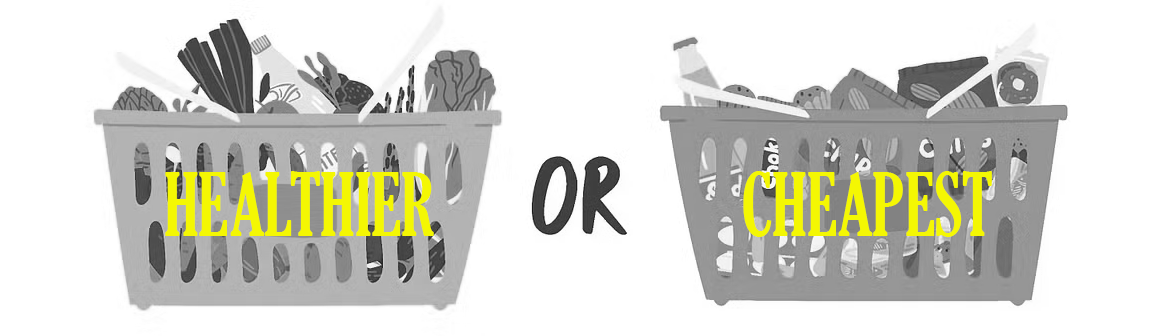
Instead of asking where it comes from, how it was produced, what it contains, or how it will affect our health, we are told to focus on one thing: the cheapest basket. Supermarkets advertise it, the media measures it, and politicians debate it. The cost of a weekly shop is reduced to a number. But rarely does anyone stop to ask a simple question: what exactly is in that basket?
Because a basket can be cheap for many reasons. It might contain ultra-processed foods filled with additives, refined sugars, and low-quality fats. It might prioritise quantity over nutrition and price over provenance. What the cheapest basket rarely tells us is the nutritional value of its contents, the quality of its ingredients, or the long-term cost to our health. Perhaps it’s time we start measuring our baskets by their health benefits, not just their price.
Imagine if we applied the same logic to everything else we buy.
When choosing a car, we do not simply buy the cheapest one available without looking under the bonnet. When buying clothes, we increasingly check fabrics, sustainability and production standards. Even when purchasing a mattress, we debate foam density, ergonomic support and longevity.
But with food, we accept the lowest price as a measure of success.
This contradiction becomes even more striking when we consider the modern obsession with health and wellness. Global spending on gym memberships, fitness apps, supplements and sportswear has exploded in recent years. Everyone wants to be fitter and live a healthier life. People will happily spend hundreds of euros on premium leggings, performance trainers or the latest smartwatch to track their workouts while often overlooking the fundamental role of what they eat.
Yet many people still believe, and want us to believe, that quality food should be cheap, and that choosing the lowest-priced option is somehow a smart consumer decision.
The irony is hard to ignore. We invest in the tools to become healthier, but we neglect the most fundamental element of health: what we eat.
This disconnect may help explain why obesity, diabetes and diet-related illnesses continue to rise across much of the developed world. Poor diet is now widely recognised as one of the leading causes of chronic disease. And yet public conversations about food affordability often ignore the role of quality entirely.
Cheap food can carry hidden costs. Highly processed ingredients are designed to be inexpensive to produce and easy to store, but they often come with lower nutritional value and higher levels of sugar, salt and artificial additives. In the short term they reduce the cost of the weekly shop. In the long term they contribute to healthcare systems already struggling with diet-related disease.
The true price of food, in other words, does not always appear on the supermarket receipt.
Of course, affordability matters. Not everyone has unlimited spending power, and access to healthy food remains a real challenge for many households. But affordability should not come at the expense of quality. The conversation shouldn’t simply be about how cheap food can be, it should be about how good it is. We should start measuring our baskets based on their health value: the healthier, the better. Only then can we explore ways to make nutritious food more affordable. One of the benefits of healthy food is that, in many cases, we actually need less of it to feel satisfied and nourished.
Food is not just another consumer product. It is the foundation of our health, our culture and our wellbeing. Hippocrates once said: "Let food be thy medicine and let thy medicine be food."
If we demand quality in our cars, our clothes and our technology, perhaps it is time we demanded the same from what we put on our plates. Because the real question is not how cheap the basket is. It is whether what is inside it is actually nourishing us.
Add a comment
No comments yet, be the first to write one
 FREE DELIVERY FOR ORDERS OVER £100









 0
0 0
0 0
0