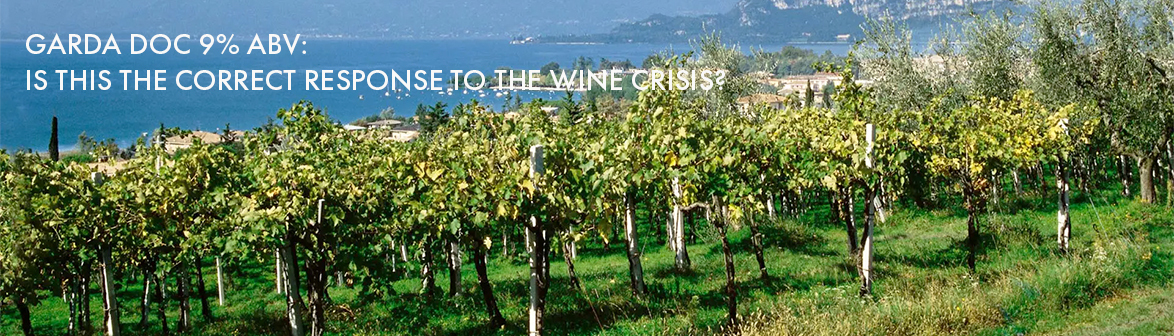
Garda DOC 9% abv: is this the correct response to the wine crisis?
June 13, 2026
Tags:
,
,
0 comments
The recent decision by the Garda DOC consortium to lower the minimum alcohol level for some wines, mainly made with Garganega, within the appellation to 9% ABV has generated considerable discussion across the wine industry. Some have welcomed the move, suggesting that it will help Garda wines appeal to consumers looking for lower-alcohol alternatives and strengthen sales in markets such as the UK. I disagree.
Not only do I believe this decision is unlikely to increase sales, but I also fear it could cause long-term damage to the Garda DOC appellation itself. More importantly, it risks undermining what Italian wine has always stood for: authenticity, identity and a strong connection to the land.
Supporters of the change argue that consumers are drinking less alcohol and that wineries need to adapt. That is certainly true. The rise of no and low alcohol drinks is one of the biggest trends affecting the global drinks industry. However, there is a fundamental problem with the argument.
Consumers actively seeking no or low alcohol products are not looking for wines at 9% ABV. The market is already flooded with alternatives at 0%, 0.5%, 5% or lower. Many consumers choosing these products are motivated by health concerns, driving regulations, fitness goals or lifestyle choices. A wine at 9% alcohol is unlikely to satisfy this audience.
At the same time, traditional wine drinkers are not necessarily asking for lower-alcohol Garda wines. They buy Garda because they enjoy the style, the grape varieties, the freshness and the character of the wines. Reducing alcohol content alone does not automatically create a better product. The danger is that Garda DOC ends up sitting in an uncomfortable middle ground, attracting neither traditional wine consumers nor no-low alcohol drinkers.
The aspect that concerns me most is that producing a naturally balanced 9% alcohol wine in Italy is, in many cases, going against nature. The consortium does not permit dealcoholisation. Producers cannot simply make a normal wine and remove part of the alcohol afterwards. Instead, the reduction must be achieved naturally. That leaves one obvious solution: harvesting grapes earlier before sugar levels rise. The problem is simple. Less sugar in the grapes means less alcohol after fermentation. But it also means higher acidity and less physiological ripeness.
For decades, Italian wine producers have worked towards achieving better ripeness in the vineyard. In fact, shortly after the introduction of the Italian appellation system, the "Superiore" category was created specifically to identify wines produced from riper grapes and carrying higher minimum alcohol levels, 12.5% at the time.
Today, the distinction between standard and Superiore wines is less focused on alcohol content because climate change have made it increasingly difficult to produce them. Lowering alcohol by harvesting earlier risks creating wines that are sharper, greener and unbalanced. Of course, skilled winemakers have tools available to manage acidity.
Malolactic fermentation, for example, can soften a wine by converting sharper malic acid into softer lactic acid. Other winemaking techniques can also help adjust the balance. But every intervention comes with consequences. The more a wine is manipulated to compensate for grapes harvested before full maturity, the further it moves away from the style that made consumers buy it in the first place. Will the resulting wines still reflect the character of Garda? Will they still deliver the freshness, drinkability and identity that consumers expect? Most importantly, will they still be balanced? These are questions that can only be answered once the wines reach the market.
There is no doubt that the wine industry is facing significant challenges. Wine consumption is declining in many traditional markets. Younger consumers are drinking less alcohol. Costs continue to rise across the supply chain. Producers are under pressure from every direction. However, I believe the answer is not to alter the identity of wine regions in an attempt to follow every emerging trend.
Wine has always been about authenticity. Consumers increasingly value products with a story, a sense of place and genuine character. Italian wine has succeeded globally because it offers exactly that. When appellations start adapting their rules to chase market trends, they risk weakening the very foundations on which their reputation was built.
Even if Garda DOC has only lowered the minimum alcohol requirement and producers remain free to make wines at higher alcohol levels, perceptions matter. Consumers may start associating the appellation with lighter, less concentrated wines. Once a wine region's image changes, rebuilding it can take decades.
Another question remains unanswered. How will wineries react? Will producers continue making their traditional Garda wines while also introducing a separate 9% version? Will retailers place the two wines next to each other on shelves? Will consumers understand the difference? Or will the lower-alcohol version become the new benchmark for the appellation? At this stage, nobody knows.
The regulation is brand new and we are unlikely to see its true impact until future vintages arrive on the market. Only then will we discover whether wineries embrace the opportunity or largely ignore it. Perhaps the biggest concern is that decisions like these often favour larger producers rather than small family wineries.
Large companies have the resources, technical expertise and marketing budgets to adapt quickly to changing regulations and consumer trends. They can experiment with multiple product lines, launch new labels and absorb the risks involved. Small producers rarely have that luxury. For them, success depends on producing authentic wines that reflect their vineyards and local traditions. They cannot simply reinvent themselves every time a new market trend emerges. This is why I remain skeptical.
The wine industry does need to evolve, but evolution should never come at the expense of authenticity. Italian wine has spent generations building its reputation around regional identity, indigenous grape varieties and respect for tradition. Trying to produce wines that nature never intended to produce may generate short-term headlines, but it rarely creates long-term value.
As always, we will have to wait and see what happens when the next vintages arrive. But if history has taught us anything, it is that consumers ultimately reward authenticity, not trends. And that is something no consortium regulation can change.
Add a comment
No comments yet, be the first to write one
 FREE DELIVERY FOR ORDERS OVER £100









 0
0 0
0 0
0