Although I am Italian and was born in Abruzzo, not too far from Calabria, but not exactly neighbours either, I knew very little about Calabria until I moved to Rome to study at university.
During my first year, I shared an apartment with an incredible guy from Calabria, Max, short for Massimiliano, from Acri. Through him, I discovered something that would stay with me for life: the warmth, kindness and generosity of Calabrian people.
The summer after our first year at university, Max invited me to spend a few days with his family in Calabria. I loved every minute of it. Even though he never returned to university after that year, I continued to make many more Calabrian friends, After him came countless other friends from Calabria and, before long, I found myself surrounded by some of the most genuine people I had ever met and some of them remain close friends to this day.
Life then took me abroad and, surprisingly, I did not return to Calabria for many years. It was only recently that I found myself back in the region, visiting three times in the space of a year, largely thanks to wine. Every visit reminded me of those university days and of the open-hearted people who had first introduced me to Calabria.
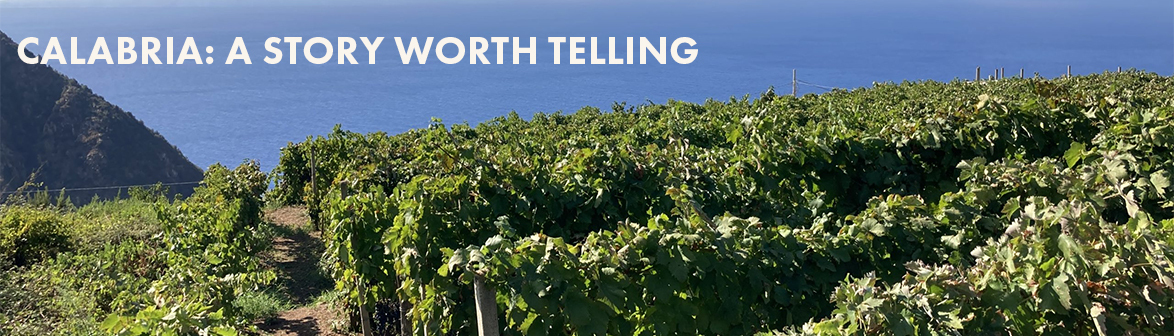
While my first two trips were focused mainly on wine, during my latest visit I finally had the opportunity to explore the region properly. What I discovered was extraordinary. Calabria is blessed with stunning coastlines, dramatic landscapes, beautiful historic towns, excellent food and, of course, some fascinating wines.
Yet Calabria remains one of Italy's least-known regions internationally. Visitors often choose destinations such as Sicily or Apulia, both wonderful regions in their own right, but Calabria has nothing to envy them. Like my home region of Abruzzo, Calabria has simply never received the same level of attention or promotion despite having all the ingredients to become a major destination.
Selfishly, I would say that both regions have benefited from remaining relatively untouched and authentic. However, I also recognise that tourism, when properly managed, can bring growth and opportunities to local communities. The challenge for Calabria, or Abruzzo, like many touristic destinations around the world, will be finding the right balance between tourism and preserving its identity.
My latest visit was for the second edition of the Merano Wine Festival Calabria, the Calabrian-focused version of the prestigious wine event held every year in Merano, which I
first attended in 2024.
As expected, the spotlight was firmly on Calabrian wine. The regional government has invested heavily in promoting the event, recognising that if Calabria wants to become better known internationally for its wines, it needs to tell its story more effectively.
I tasted a wide range of wines. Some were good, a few were great and, naturally, some were less impressive. Most came from the
Ciro’ appellation, which remains the region's most important wine area and was clearly at the centre of the festival's promotional efforts.
I first discovered Cirò wines several years ago and immediately fell in love with them. However, despite their quality and character, they remain relatively unknown to most wine drinkers. Part of the problem, in my opinion, is that a handful of larger producers continue to make mediocre wines, despite what they may believe or claim, and in doing so they are damaging the reputation of the entire appellation and region. Cirò could, and should, be doing much better.
What I found most surprising during the festival was the marketing message being promoted. The argument seemed to be that consumers should choose Cirò, and Calabria wines in general, because they offer good value compared to more famous wine regions.
I disagree wholeheartedly.
Wine drinkers should not buy Calabrian wines because they are cheaper, they should buy them because they are good.. and they are.
Both Gaglioppo, the region's flagship red grape, and Greco Bianco, one of its most important white varieties, are capable of producing outstanding wines. Great wines, however, are never the cheapest wines. Competing on price is a race that nobody wins. Consumers who buy wine solely because it is cheap are rarely interested in the wine itself and barely read the label. They are simply looking for the lowest price.
Instead, Calabria should focus on what makes it unique: its indigenous grape varieties, its history, its terroir and the distinctive character of its wines. Calabrian wines should not be presented as alternatives to more famous appellations but as wines worthy of standing on their own merits.
The region also needs to engage more directly with wine drinkers, not just importers and trade professionals. Importers like Italyabroad.com can bring
these wines to the UK, but if consumers have never heard of them, they will struggle to gain traction regardless of how good they are. But Calabria is much more than just wine, it is also
extra virgin olive oil.
The wineries producing truly exceptional wines should be the ones leading this change. Their future success will not depend on being cheaper than the competition but on convincing consumers that Calabrian wines deserve a place in the cellar because of their quality, authenticity and sense of place.
After spending time in Calabria, I am convinced the region has everything it needs to succeed. What it needs now is the confidence to tell its story differently.
And it is a story well worth telling.
 FREE DELIVERY FOR ORDERS OVER £100









 0
0 0
0 0
0